A 5-Minute Shelf Decor Reset: Remove One Color

You know that moment when you look at your shelf decor and think, “Why doesn’t this look as good as it should?”
Nothing is technically wrong. The pieces are fine. You might even love some of them.
But the shelf still doesn’t look as pulled together as you expected.
Good news.
You don’t need to restyle the whole shelf.
You don’t need to buy anything new.
You don’t even need to move much around.
You just need five minutes and one small, confidence-building decision.
This is the same kind of edit I talk about in my post on fixing a space that feels messy fast — small removals that make everything else work better.
The One Shelf Decor Move That Changes Everything
Here’s your only to-do:
Remove one color.
That’s it.
Not one item.
Not one style.
One color that isn’t pulling its weight.
This is the same move I use when styling shelves in my own home—and it works whether your shelf is decorative, functional, or deeply personal (like mine).
Do This First (Before You Touch Anything Else)
Set a five-minute timer and walk through this exactly as written:
- Step back and look at your shelf from across the room
- Mentally list the colors you notice first
- Identify the one color that doesn’t quite belong
- Take that piece off the shelf
- Stop there
No replacing.
No shopping.
Just remove—and look again.
Once one color steps out, the shelf usually starts to come together. You may still shift a piece or two, that’s completely normal. But now the remaining pieces relate to each other more clearly.
That’s it.
No fluff.
No confusion.
No mixed signals.

How to Spot the Color That Needs to Go
If you’re standing there thinking, “Okay… but which color?”
Use this quick filter. You’re not overthinking — you’re just paying attention.
The color to remove is usually the one that:
- Only appears once
If it shows up in a single object and nowhere else, it’s probably not doing much work for the shelf. - Feels unrelated to the others
Not wrong on its own — just not connected. It doesn’t echo anything nearby. - Isn’t a color you love anymore
This one matters. If you wouldn’t choose it again today, that’s your answer. - Feels outdated or out of season
Not everything has to be timeless. But if a color feels like it belongs to a different chapter, it’s okay to let it step out. - Draws your eye for the wrong reason
If you keep staring at one spot on the shelf — not because it’s special, but because it feels distracting — that’s usually a color issue, not a styling one.
You’re not judging the object.
You’re just asking whether the color still belongs.
The Color I Removed on This Shelf
Here’s the honest part.
When I did this exact exercise on my own home office shelves, the color that had to go wasn’t neutral.
It was deep teal.
I love deep teal.
But on these shelves, it was only showing up two or three times, and it wasn’t being supported anywhere else in the room. It had slowly become a solo act.
I also pulled out a stack of colorful book spines that had slowly crept in over time. Nothing wrong with them individually — they just weren’t helping the rest of the colors do their job.
What Changed Once It Was Gone
Once those pieces were gone, everything else clicked into place.
Same shelves.
Same meaningful items.
Just a tighter, more intentional color story.
You won’t see a dramatic before-and-after here — and that’s on purpose.
This wasn’t a makeover. It was an edit.
This is exactly why I teach removing a color instead of rearranging everything.
When one color steps out, the colors you actually love get to show up more clearly.
Love this idea? Keep it handy.
I share more about adding color back in intentionally — without undoing the edit — in this post on using accent decor for pops of color.
A Quick (Very On-Brand) Plot Twist 😄
If you’ve been around here for a while, this might sound a little backwards.
I’m usually the first one saying:
Add the color.
Bring it in.
Don’t be afraid of it.
So yes—it might sound funny coming from me to tell you to remove one color.
But I’m not telling you to lose color.
I love color. I always will.
This little exercise is about honing in on the right color—the one that deserves to show up again and again—instead of letting a random extra sneak in and steal the spotlight.
Think of this as editing, not muting.
The color you keep will actually shine more.
Why This Works (Even on Meaningful—and Functional—Shelves)
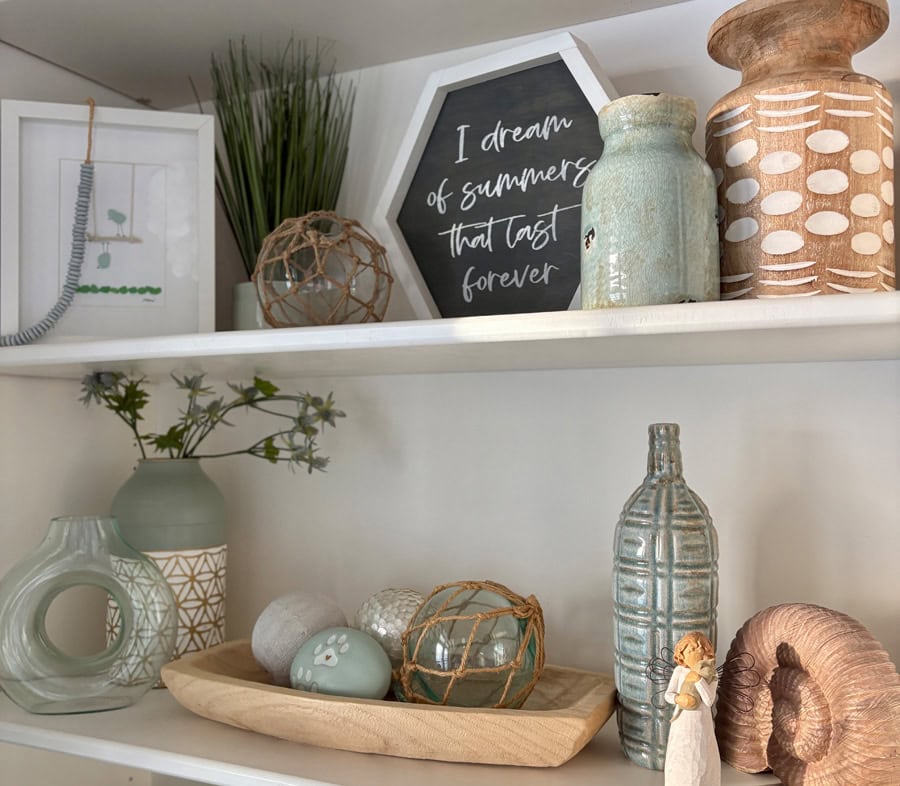
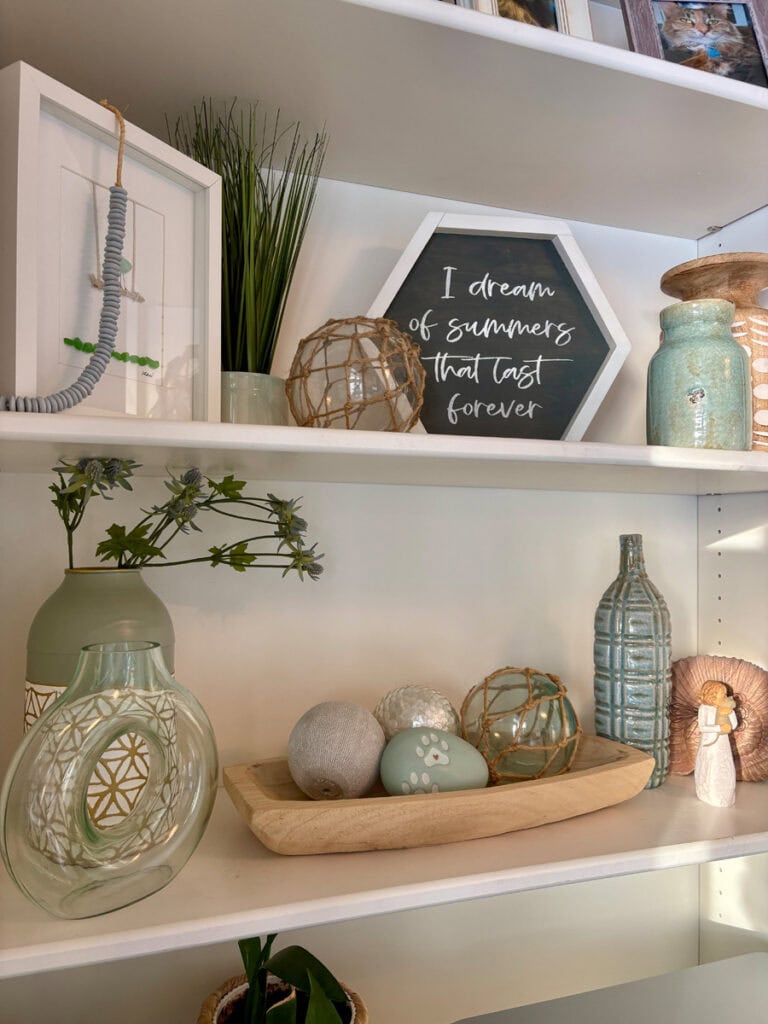
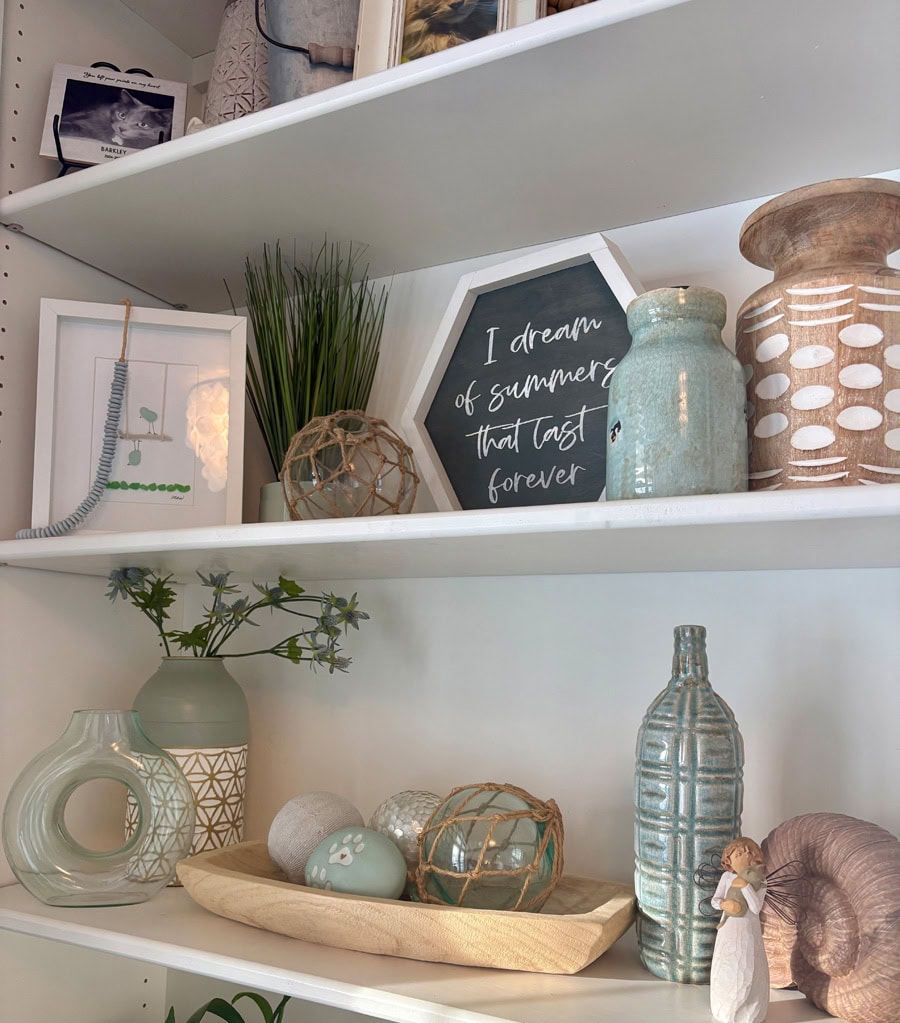
On my home office shelves, I’ve mixed:
- Personal photos
- A few memorial pieces for my fur babies
- Handmade art from a friend that recreates a favorite vacation photo
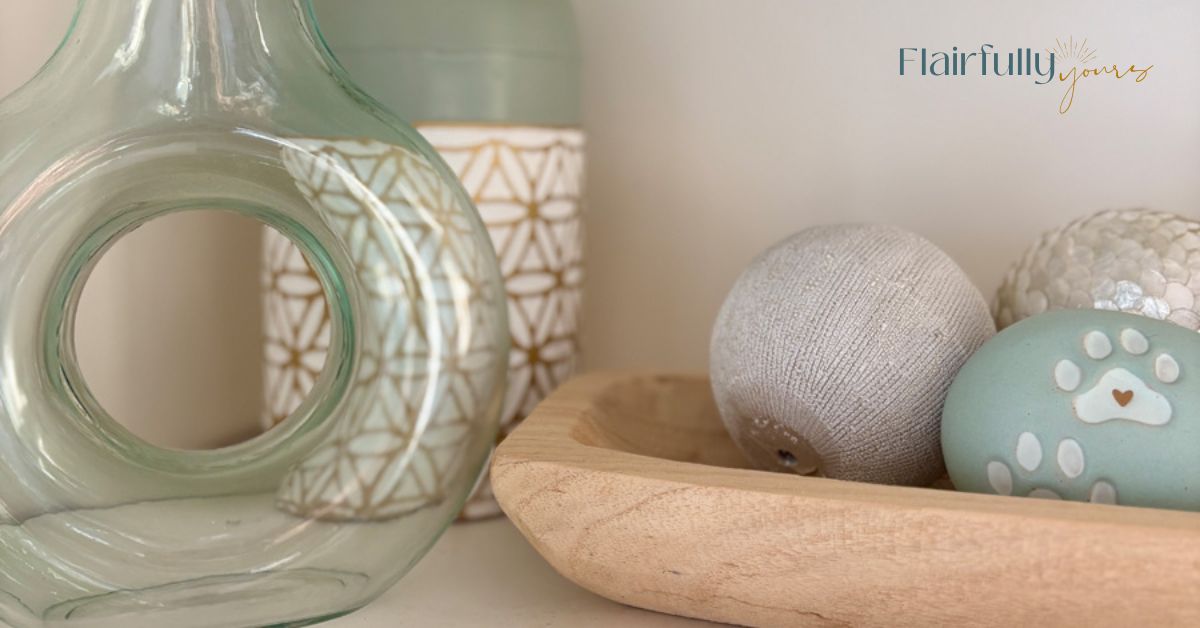
- Coastal-vibe vases and spheres I’ve collected slowly over time (and rotate throughout my house)
- And my beloved “I dream of summers” word art (because… summer girl forever)
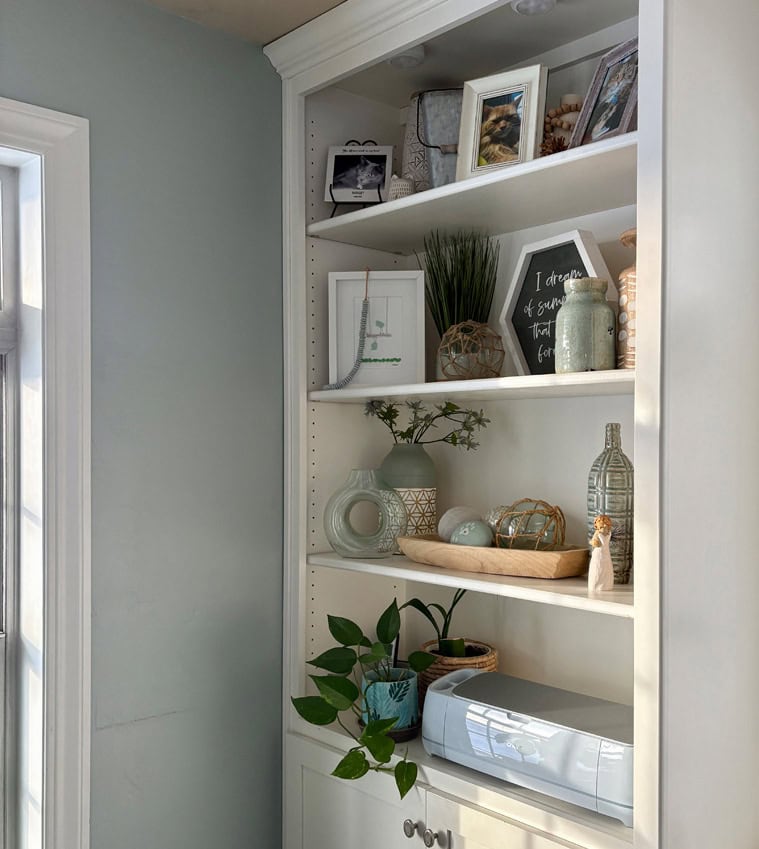
There’s also my very not-pretty-but-very-functional Cricut living on the bottom shelf.
The key to making it blend in is placement. It’s tucked below the main visual line, where it can do its job without competing for attention.
It’s still part of the space — just not the thing your eye lands on first. (Thank goodness!)
The pieces matter.
The function matters.
But it’s the colors connecting everything that make the shelf work as a whole.
Removing one off-note color doesn’t erase the story of your shelf.
It lets the rest of the story come through more clearly.
For me, it means a relaxed, beachy vibe that just feels right when I’m sitting down to work.
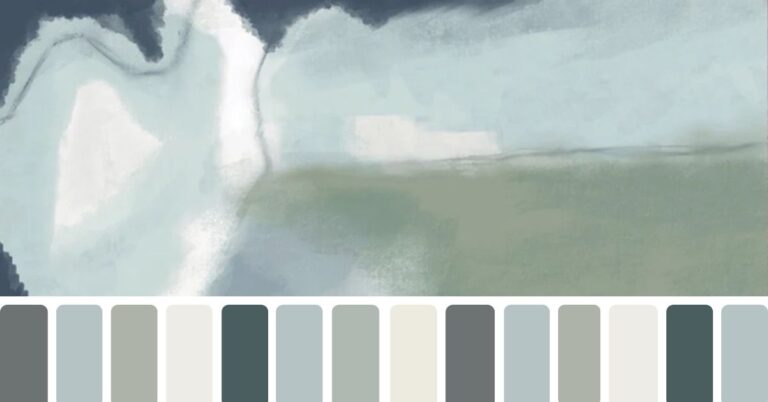
A Peek at the Color Palette Behind This Shelf

This shelf pulls from four colors I return to again and again:
- Soft aqua
- Muted blue-green
- Warm, beachy wood
- Fresh white
I even pulled a mini palette directly from one of the shelf close-ups to show how tightly this comes together. And yes—my home office walls are painted Sherwin-Williams Silvermist, which happens to align beautifully with these tones.
That’s not an accident.
That’s color working with you.

A Shelf Decor Tip You Can Steal Today
If you want to make this even easier:
- Let wood and white do the neutral work
- Repeat your favorite color at least three times
- Keep meaningful pieces—but support them with colors that already exist on the shelf
You don’t need to strip personality out of your shelf decor to make it look good.
You just need the colors to show up for each other.


Want to Take This Beyond Shelf Decor?
This same edit-first approach is how I think about color everywhere—from shelves to entire rooms.
It’s also the foundation of what I’m building inside the Color Confidence Toolkit: a simple, step-by-step way to work from the colors you already love, narrow your options, and build a cohesive palette without second-guessing every decision.
👉 You can join the Color Confidence Toolkit waitlist here
(No pressure — just a way to be first to know when it’s ready.)
But for today?
Five minutes.
One color.
Done.
More shelf styling ideas? Check out 7 simple shelf styling ideas here.