
Too Much Stuff Making Your Home Feel Messy? Fix It Fast

If your home still feels chaotic even after cleaning… you might just have too much stuff.
Not junk. Not garbage. Just… way more things than your home has room to calmly handle. (Too much stuff, not enough space—you’re not alone.)
This is part two of our clutter-clearing series (👉 catch up here), and today we’re getting hands-on. I’ll walk you through exactly how to calm the chaos—especially if your space is overflowing but you don’t know where to start.
We’re not just talking storage bins. We’re talking real solutions that help you deal with too much stuff—without wrecking your coastal style.
Here’s your simple plan for clearing the stuff you see every day—without losing your style or sanity.
Step 1: Walk Through Your Home Like a Guest (Too Much Stuff Will Jump Out Fast)

Pretend you’ve never seen your house before. Step into each space with fresh eyes—and notice what your brain trips over.
Better yet? Ask an honest friend to do a walk-through with you. You’ll be amazed at what jumps out.
- Is there random clutter on flat surfaces (kitchen island, table, windowsills, top of the fridge, couch arms, your desk)?
- Do you have piles on the floor—laundry baskets, shoes, mail, toys, donation bags?
- Are the items you’re keeping actually ones you like—or just what ended up there?
QUICK TIP:
Start by clearing just one of those surfaces. Literally, clear EVERYTHING off. Don’t sort yet—just empty it completely. This is your reset moment.
Step 2: Sort + Simplify What You Just Cleared
Everything you removed from that space falls into one of these categories:
- Trash: Obvious first win.
- Belongs elsewhere: Grab a laundry basket and do a whole-house drop-off later.
- Functional but ugly: Let’s find it a prettier home.
- You don’t even like it: Byeee 👋
- Decorative and you love it: This can go back—but maybe not in the same way.

COLOR REMINDER:
Before you put anything back, take a second to think about your home’s color vibe.
When you’re dealing with too much stuff, even subtle color mismatches can make things feel messier than they are. A tight palette—soft blues, whites, natural tones—instantly calms things down visually.

Step 3: Rethink Floor Clutter (Yes, Even the “Useful” Stuff)
We don’t talk about this enough—but your floor space matters.
Baskets, bins, drop zones… they’re great in theory, but scattered floor stuff still reads as clutter.
⚠️ Hot spots to check:
- Mudrooms packed with baskets—but no one remembers what’s in which one (and no one actually uses them!)
- Pantry floors taken over by oversized packs of water bottles, bulk snacks, and random appliances you swore you’d use more
- Entry console tables with a bottom shelf jammed with shoes, tote bags, and old mail, or random décor (perhaps even that ceramic Christmas tree you forgot about 8 months ago!)

RETHINK IT:
If it has to live there, create unity with one large basket that fits the style of the room (think: woven, canvas, or seagrass for a coastal feel).
Stick to a consistent tone—whitewashed wood, driftwood gray, or natural tan—to keep the look clean and easy on the eyes.
HOOK CLUTTER ALERT:
You don’t need four seasons of coats hanging on the hooks by your back door. Hooks are meant to help, but when they’re overflowing, they just become wall-mounted clutter.
Rotate seasonally or limit each family member to one item on display.
Save the hooks for your go-tos—not the just-in-case, someday-maybe, snowstorm-in-June jackets or the rain parka you pull out once a year.
If you’re digging to find your everyday coat, it’s time to clear the clutter. Rotate seasonally and keep only what you actually use.
Step 4: Identify the Pain Points
Ask yourself: What’s the spot that drives me absolutely nuts? Focus on those first!
Here are mine:
- The garage-entry mudroom — aka the universal drop zone for backpacks, hats, sunglasses… and every single pair of shoes my husband and sons own. Sandals, sneakers, boots, slippers, and shoes for every sport they’ve played over the last decade—they all think this spot is fair game.
- The kitchen island — it’s flat, so obviously it becomes a landing zone for everything: bags, chargers, groceries, loose change, yesterday’s mail, today’s drama.
- The laundry room counter — where random stuff goes to live when no one knows what to do with it. Also known as the emergency “company’s coming!” clean sweep zone. (You know the one.)


Can it be grouped more intentionally—or stored in a way that feels calm, not chaotic? Closed storage works wonders. Stick to a tight color palette—think all light neutrals, or one accent color like navy or soft green to keep things feeling clean. And don’t underestimate seasonal swaps—they are KEY!
ACTION:
Pick one pain point. Clear it. Then ask:
Love this idea? Keep it handy.
- What needs to stay nearby?
- What can be relocated?
- What needs a home?
- What do I access the most?
BONUS TIP:
If you’re restyling this area afterward, go with storage or decor in a soft, soothing color—something that blends with your space, not shouts over it.
Think calm tones like whitewashed wood, driftwood gray, soft blue, sandy beige, or a muted green. The goal is to avoid bold pops that demand attention and instead create a space that feels light, soothing, and easy on the eyes.
Repeating the same tone across your storage pieces—baskets, bins, trays—helps everything feel more streamlined and less like visual noise.
Feeling the too much stuff, not enough space squeeze? Look for double-duty pieces that actually work in real life:
- A lidded basket that hides paperwork, extra cords, or the latest pile of school stuff—topped with a lamp or plant so it works as a side table
- A tray on the kitchen counter that holds salt, oil, napkins… and also catches the randoms (hello, earbuds and sunglasses)
- A slim wall rack by the entry to sort mail, hang keys, or stash your sunglasses—without taking over the whole wall
- A bench with hidden storage near the back door or mudroom where shoes, sports gear, or hats can disappear in seconds
- A lidded ottoman in the living room that hides the remote jungle, throw blankets, or even board games
When storage works and looks good ✨


Closed baskets win the visual clutter game. Use lidded options for the messy stuff (toys, cords, extra linens) and open ones for things that look good styled—like rolled towels or spa-like essentials. Bonus if everything shares a calm tone that blends in, not sticks out.
In spaces that feel like a dumping ground, the right storage makes all the difference—but only if it works with your vibe.
Choose open baskets for things that naturally look neat (think towels, decor, or bathroom items in matching tones).
Save the lidded options for anything visual-clutter-y—cords, toys, mail, or seasonal overflow.
helpful tip:
Avoid wire or clear bins in visually busy areas. They might organize things, but they don’t hide them—and that can still feel chaotic. Instead, go for storage in a tone that blends with your room: whitewashed, soft blue, driftwood gray… something that keeps the focus on calm, not the clutter.
Step 5: Use Labels to Stay Sane (and Find Things Later)

One of the biggest reasons clutter stays out in the open?
You’re afraid that putting it away means forgetting where you put it. Or heck, forgetting you even HAVE it!
That’s where labels change the game. Clear, consistent labeling helps you tuck things out of sight without losing track.
Try this:
- Use sticky notes to label your piles while you’re sorting. It’s quick, low-commitment, and helps you stay focused mid-declutter.
- Matching bins with printed labels for kid gear, pantry zones, off-season coats and accessories, or office supplies
- Chalkboard tags or clip-on labels for baskets
- Inside drawers: painter’s tape makes a great temporary label while you’re figuring out your system
When you’re already overwhelmed with too much stuff, labeling gives you peace of mind. It’s not just organization—it’s confidence you’ll be able to find it again.
Step 6: Make Storage Look Like Decor

Let’s not ruin the coastal calm with clunky storage. Instead:
- Use a rattan tray on your kitchen counter to corral oil, salt, and napkins
- Add a lidded basket near your mudroom bench to stash shoes or seasonal gear
- Tuck a labeled seagrass bin inside a cabinet to keep the visual calm going even behind doors
- Mount a slim wall organizer near your entry if mail clutter is a thing (bonus: use a pretty wooden one!)
COLOR TIP:
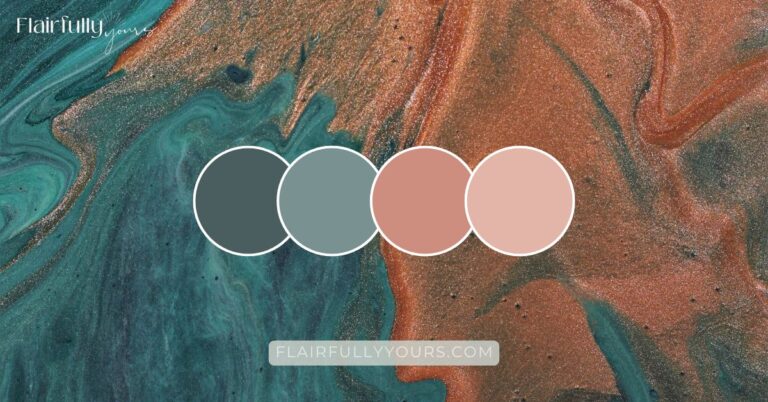
Stick with finishes that echo your overall color palette—whether that’s whites and driftwood, blush and brass, or smoky teal and soft linen. When color choices feel intentional, even your storage pieces become part of the decor.

💥 Dealing with Too Much Stuff? Start Here.
Overwhelmed by all the things? Don’t start with a shopping trip or a Pinterest board. Start here:
- Pick one surface or one floor spot and clear it completely.
- Sort everything into 5 piles: Trash, belongs elsewhere, don’t like, needs a prettier home, love and want to keep.
- Ask if the colors work with your vibe. Do these pieces feel calm or chaotic?
- Only put back what fits your style + life. The rest? Rehome or remove.
- Find a better home nearby for what stays. Look for baskets, trays, drawers, or slim storage options.
- Label everything. It’s not just for looks—it helps you find things later and keep clutter from creeping back.

✅ Start small.
✅ Choose calm tones.
✅ Keep what you love, store what you need—beautifully.
✨ Final Thoughts: Your Home Can Be Tidy and Beautiful
The goal isn’t just “less stuff.”
It’s about creating a home that feels calm, not chaotic—even when life’s busy and space feels tight.
Start small, stay true to your coastal vibe, and choose storage that blends in beautifully.
➕ Keep the Momentum Going
You might also love: