
White Trim: Pros, Cons, and the Best Sherwin-Williams Paints

Why Trim Matters More Than You Think
If you’ve been staring down Pinterest boards or builder samples wondering, “Should I choose white trim?” — you’re not alone. It’s one of those decisions that seems simple but actually sets the tone for your whole home.
White Trim: Classic but Not Effortless
White trim is timeless and coastal-approved, but it does come with its own pros, cons, and maintenance quirks.
The good news? Once you understand the trade-offs (and know the best paints to try — spoiler alert: my favorite Sherwin-Williams picks are coming up) you can confidently decide whether it’s the right fit for your style and your lifestyle.
The Mistake Most People Make
Here’s what I see over and over: people default to the builder-basic white or stick with whatever wood tone is “standard.” Or worse… they chase what’s trendy in the moment — only to regret it a few years later when styles shift.
Easy? Yes.
Right? Not always.

Want to see more trim color options? Check out How to Choose the Right Trim Colors for Your Coastal Home to explore 5 trim color families and find the perfect hue for your space.
Why This Decision Is Bigger Than You Think
Building a house involves a million and one decisions, and trim often feels like a throwaway choice. But the truth? Your trim is literally all over your home — and it’s not something you can easily swap out later.
Undertones, sheen, and placement all matter. Getting this one right up front can save you years of regret.
💡 Builder Tip: Don’t let trim be an afterthought. It frames every single room, and unlike wall color, it’s not a quick weekend repaint if you change your mind later. Choose wisely now, and you’ll thank yourself for years.
My Story: Why I Chose White Trim in 2009 (and Still Love It)

When we built our home back in 2009, plenty of people told me not to do white trim and doors.
- “It’ll cost more — all that extra labor to fill nail holes, caulk seams, and spray the trim instead of just leaving it wood.”
- “White shows everything — scuffs, fingerprints, dings.”
- “Wood trim is richer, warmer, more timeless.”
But my gut said white, and I stuck to it. And every single day since, I’ve been thankful I did.
White trim makes every paint color pop. It’s crisp, classic, and endlessly flexible. Wood grains change with trends (orangey oak, honey maple, gray-washed everything), but white has stayed timeless and clean.
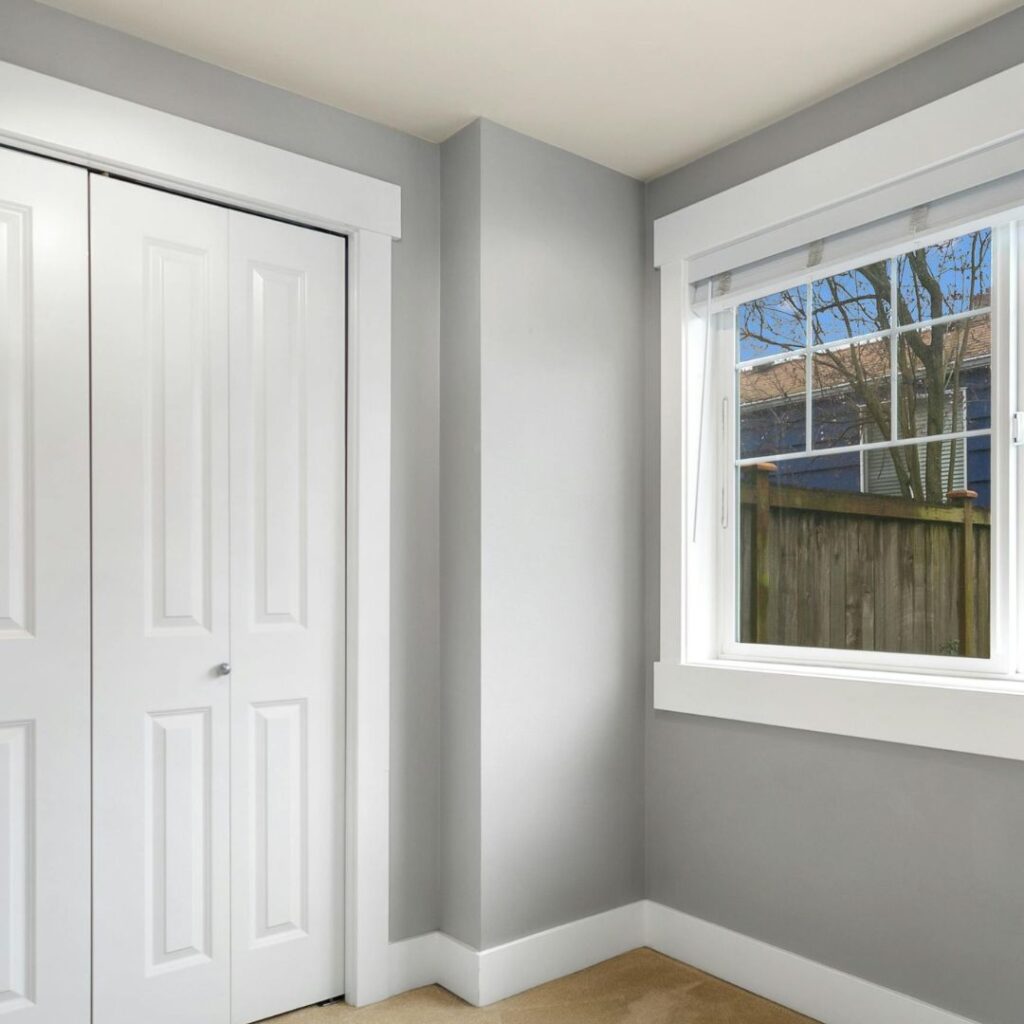
Do I notice wear and tear? Absolutely. But a quick touch-up with leftover paint or a swipe with a Magic Eraser is way easier than a full trim overhaul when trends shift.
💡 Pro Tip: always keep a little jar of your trim paint on hand for quick fixes — it’s a lifesaver.
The Pros and Cons of White Trim + Doors
✔ Pros
- Timeless: Wood grains and stain colors shift with trends, but white never dates itself.
- Color Booster: Makes every wall color crisper and gives you more flexibility to change paint colors down the road without worrying about clashing trim.
- Bright + Airy: White trim bounces natural light around a room — perfect for coastal spaces where you want everything to feel open and breezy.
- Easy to Accessorize: If styling isn’t your strong suit, white trim has your back. It pairs with everything — photo frames, accent pieces, woven baskets, even your everyday white dinnerware. You’ll never regret having a neutral foundation.
- Hardware-Friendly: White works with any finish you love — polished chrome, warm brass, matte black, or even mixed metals. No awkward color matching required.

✘ Cons
- Shows Wear: Scuffs and fingerprints are inevitable, especially with kids and pets.
- Needs Upkeep: Touch-ups and the occasional refresh are part of the package.
- White Will Always Match, But the Vibe Will Vary: This is where people slip up. Creamy whites (like Alabaster) bring warmth and softness, while crisp whites (like Pure White) feel sharp and modern. Extra White can lean stark if the rest of your home has warmer tones. The takeaway? Even though white works with everything, you still need to choose the feel you want your home to have.
- More Labor-Intensive for DIYers: Painting trim white takes extra steps. Once trim is installed, nail holes and seams need to be filled, sanded, caulked, and then sprayed or brushed with paint for a smooth finish. It’s doable, but it’s more work than staining wood and calling it a day.

The Mistake: Ignoring Undertones
Not all whites are created equal. Pick the wrong undertone and suddenly your “perfect” wall color feels off.
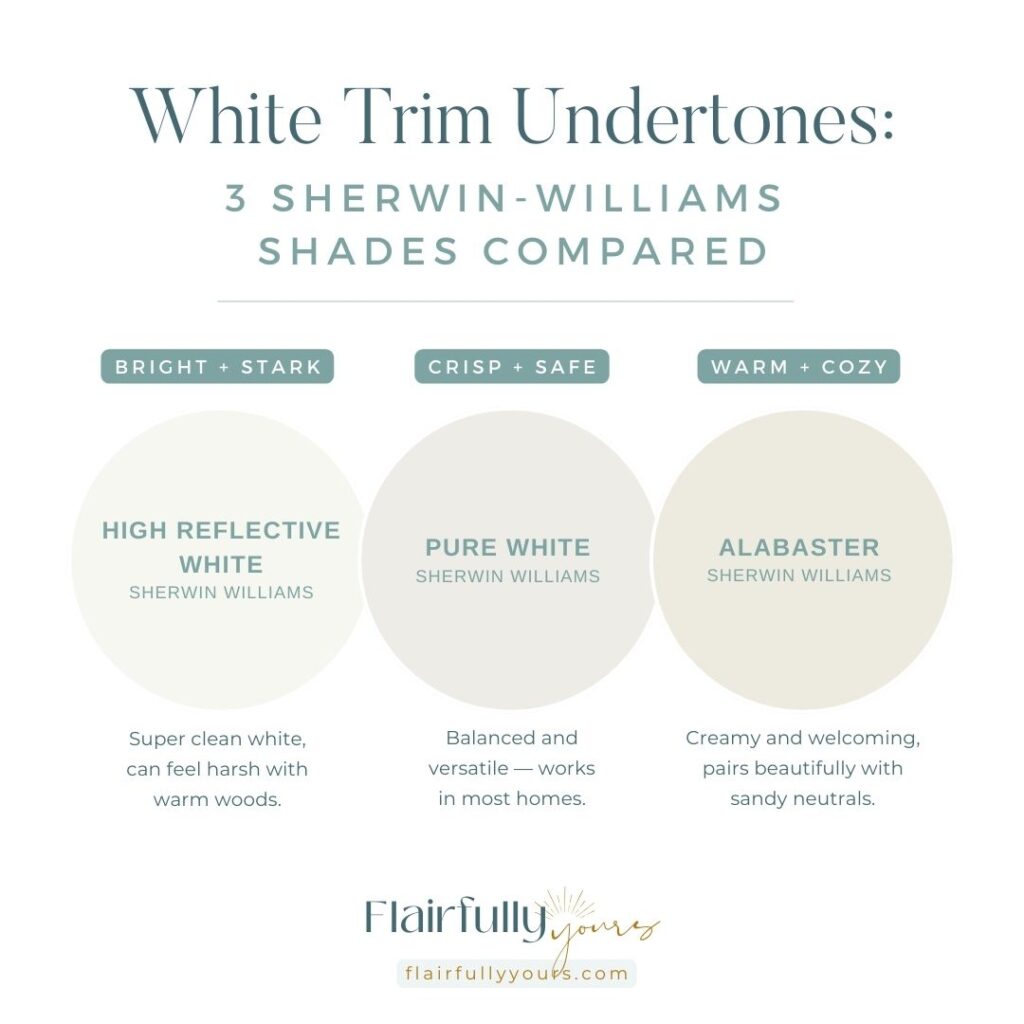
- High Reflective White (SW 7757) → Bright + Stark. A very clean, sharp white. Looks fresh in modern spaces but can feel harsh against warm wood floors or beige walls.
- Pure White (SW 7005) → Crisp + Safe. My go-to balanced option. Crisp and versatile without leaning too cold or too creamy — it works in most homes.
- Alabaster (SW 7008) → Warm + Cozy. A creamy, welcoming white. Perfect with sandy beiges, but can read dingy if paired with cooler wall colors.
👉 Pro Tip: Don’t just test your trim paint against the wall — check it against your floors too. Wood tones, tile, and even carpet can completely change how a white reads.
Paint a small board or piece of trim with your top contenders and move it around the room at different times of day. Undertones live in the details, and this quick step can save you years of “why does this look off?” regret.
My Favorite White Trim Paints (and Why They Work)
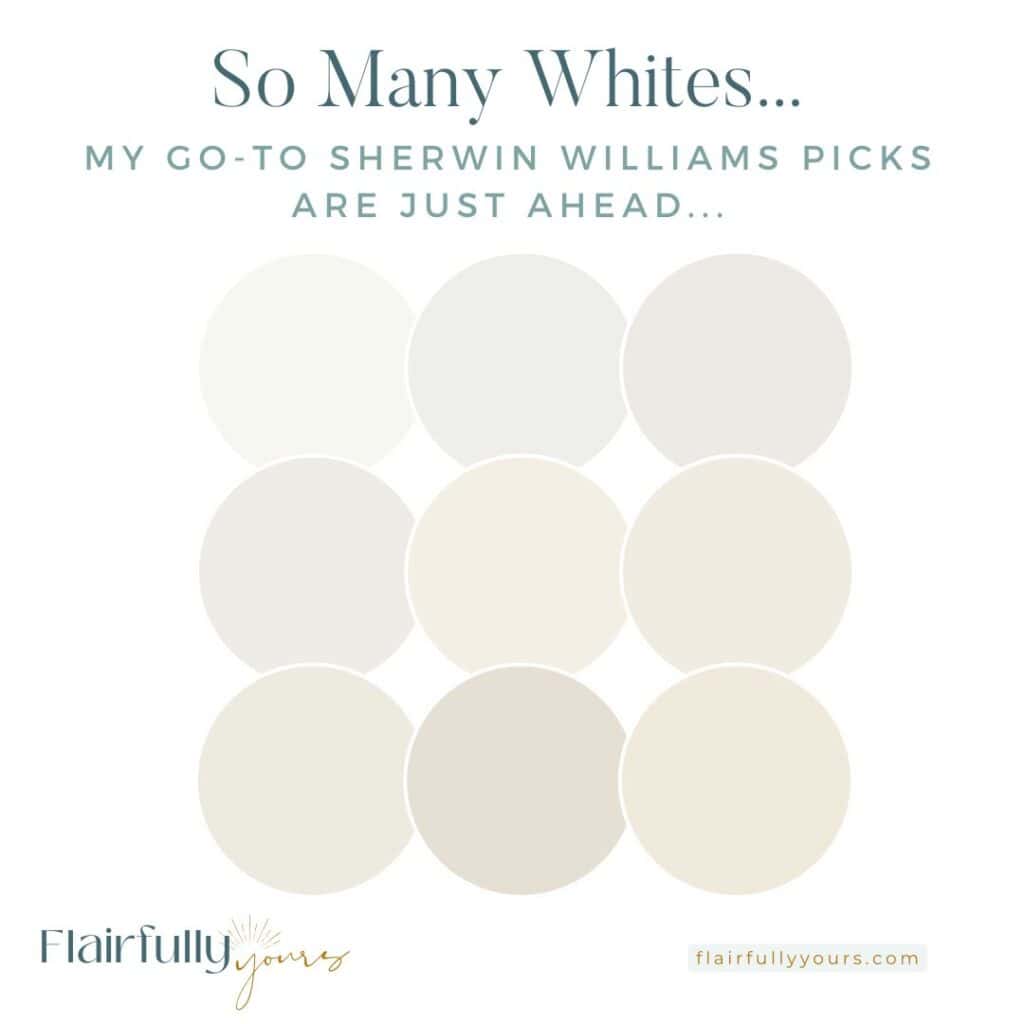
Whether you’re looking for the best white paint for trim overall or specifically want the best white paint Sherwin-Williams offers, these are the shades I trust — and exactly when to use them:
Love this idea? Keep it handy.
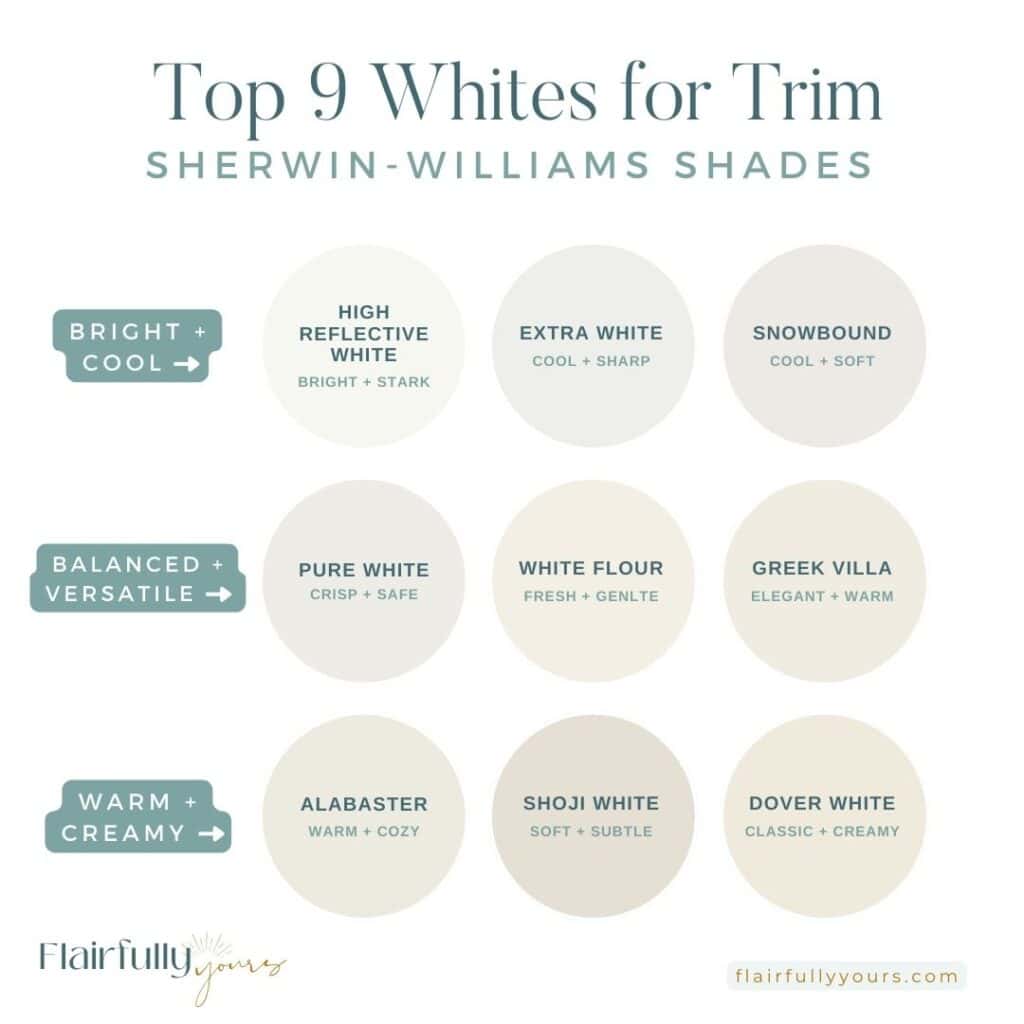
- High Reflective White (SW 7757): The cleanest, brightest white. Best for modern builds or high-contrast looks — but can feel stark with warm woods.
- Extra White (SW 7006): Bright and sharp with a cooler undertone. Best if your home leans toward grays, blues, or modern finishes.
- Pure White (SW 7005): Crisp, balanced, and versatile. My safe go-to that works in almost any home without reading too cold or too creamy.
- Alabaster (SW 7008): Warm and soft without being yellow. Best paired with sandy beiges, warm neutrals, or when you want trim to feel cozy.
- Shoji White (SW 7042): A subtle, greige-leaning white. Best if you want your trim to blend more than stand out — sophisticated and understated.
- Dover White (SW 6385): Creamy and classic. Best if your home has beige walls, warmer flooring, or lots of wood tones.
- White Flour (SW 7102): Fresh and gentle. Sits between Alabaster and Extra White — ideal if you want warm but still light + airy.
- Snowbound (SW 7004): A soft white with a touch of gray. Best with cool palettes, especially if you don’t want stark trim but still need contrast.
- Greek Villa (SW 7551): Elegant and warm. Pairs beautifully with neutrals, and feels timeless in both traditional and modern coastal homes.
👉 Pro Tip: If you’re painting existing trim, brush samples right onto the baseboards or door casing so you can see how each white plays with your walls and floors.
For a new build, ask your painter or builder for a scrap piece of trim (or even a short baseboard) and paint your samples there. Then move it room to room and check it in daylight and lamplight.
Seeing whites on the actual trim surface — not just a wall or a paint chip — is the only way to know how they’ll truly look once installed.
Doors Don’t Have to Match Trim
Here’s a place to add personality. White trim with a contrasting door color makes a huge impact without overwhelming the room.
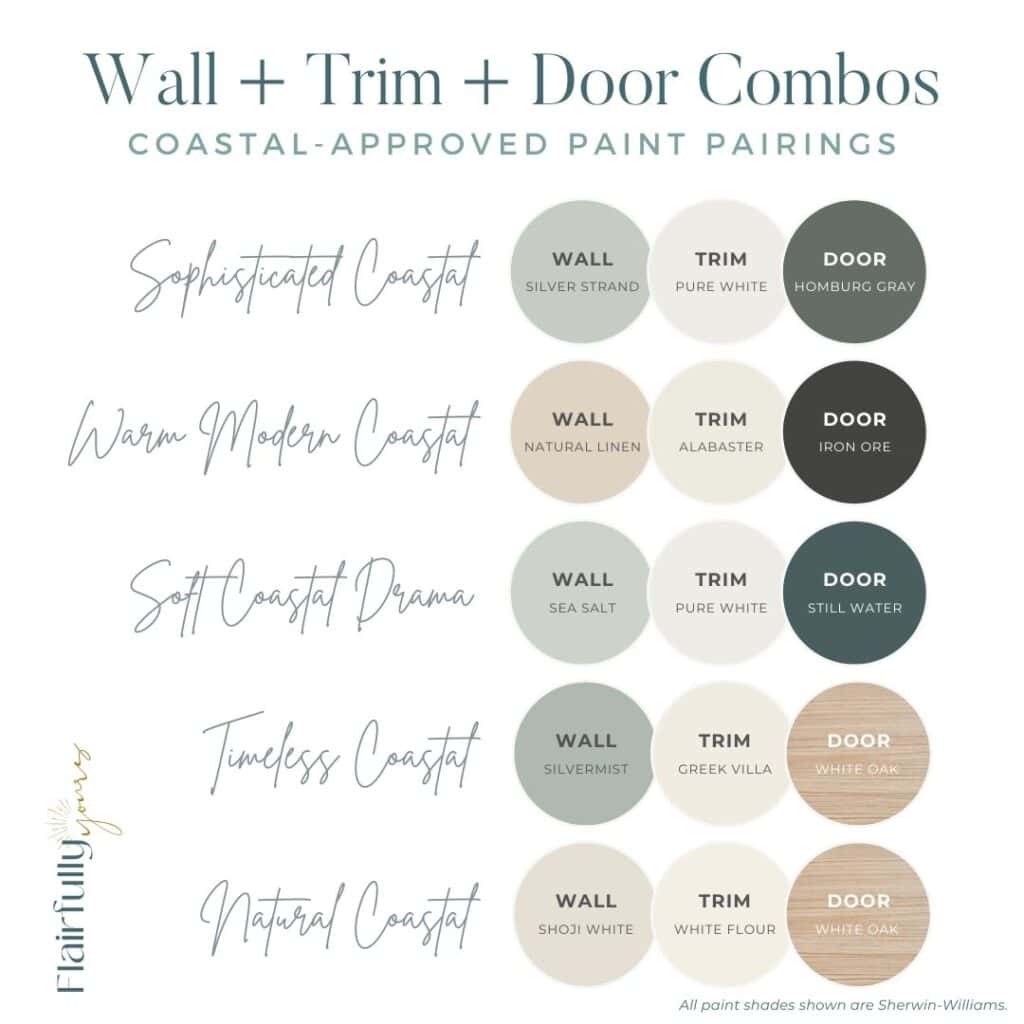
- Silver Strand walls + Pure White trim + Homburg Gray doors → Sophisticated Coastal
- Natural Linen walls + Alabaster trim + Iron Ore doors → Warm Modern Coastal
- Sea Salt walls + Pure White trim + Still Water doors → Soft Coastal Drama
- Silvermist walls + Greek Villa trim + White Oak doors → Timeless Coastal
- Shoji White walls + White Flour trim + White Oak doors → Natural Coastal
👉 Notice Pure White shows up more than once? That’s intentional — it’s one of the most reliable trim shades. It pairs just as beautifully with cooler colors like Sea Salt as it does with warmer neutrals like Silver Strand. If you want flexibility, Pure White is the trim to try first.
And yes, wood doors can absolutely work! Stained oak or walnut framed in white trim creates balance — the wood adds warmth and character, while the white keeps the look coastal and timeless.
Take a closer look at two of my all-time favorite paint shades in my home here: Silver Strand and Homburg Gray!
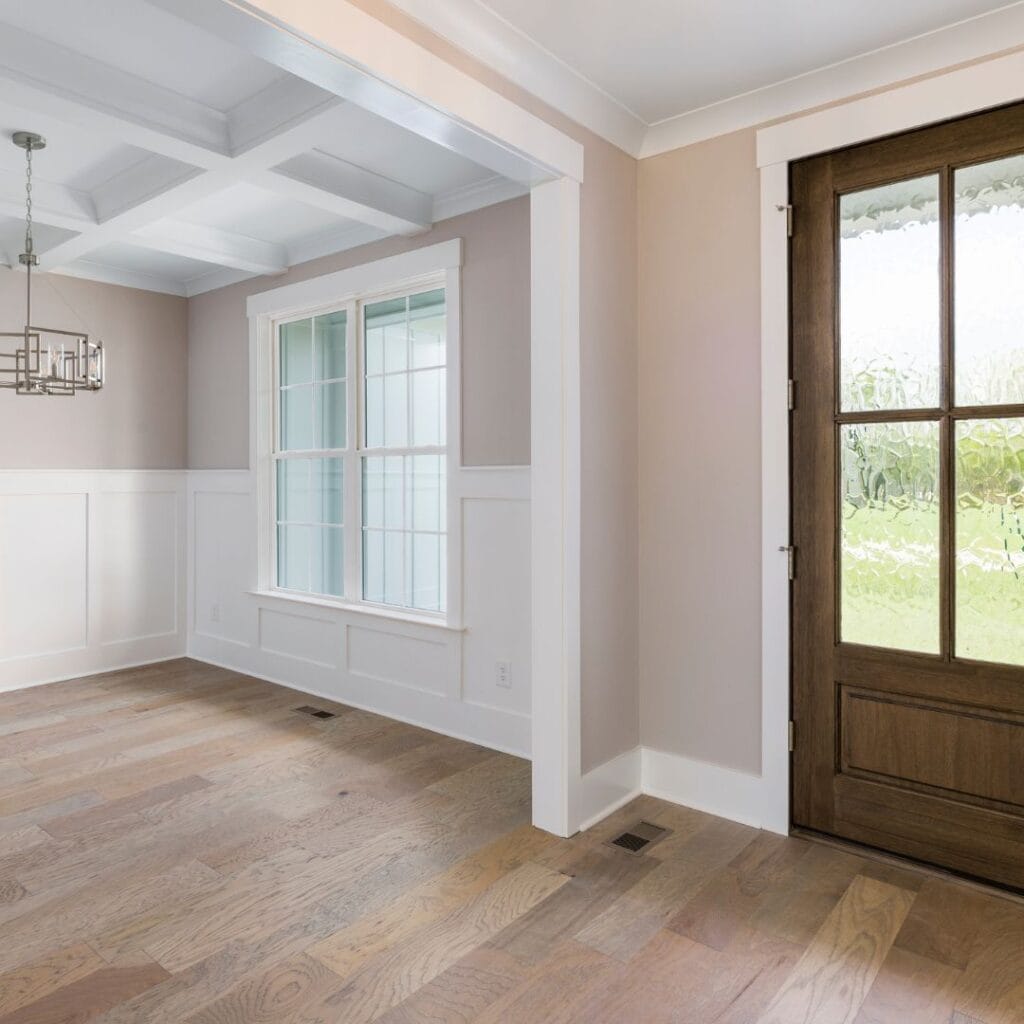
Foolproof Tips for Trim + Doors
Pro Tip #1: Sheen Matters
Sheen feels like a small decision, but it changes how your paint performs every single day.

- Trim + Doors: Semi-gloss → durable, easy to wipe clean, resists scuffs.
- Walls: Satin or eggshell → just enough sheen to clean easily without highlighting every bump or flaw.
- Ceilings: Flat or matte → hides imperfections, keeps things soft and subtle overhead.
Pro Tip #2: Keep Touch-Up Paint Handy
White trim will show life. Scuffs, fingerprints, dings — you’ll see them. Keeping a little container of trim paint on hand makes it easy to freshen up a baseboard or door frame in minutes.
Will every touch-up be flawless? Nope. Fresh paint can look a touch brighter than the original, especially years later. But think of touch-ups as a refresh, not perfection. Every few years, repaint your busiest areas (like the mudroom or entry) to even things out.

Maintaining White Trim Without Losing Your Mind
White trim does take a little TLC, but it’s easier to manage than people think. Here’s how to keep it looking fresh without stressing:

✨ Use the right sheen. Semi-gloss is your best friend — durable, wipeable, and forgiving. Matte or flat trim will leave you scrubbing forever.
✨ Build a touch-up kit. Keep a labeled mason jar or small container of your trim paint (with sheen + color written on top), plus a mini angled brush, painter’s cloth, and a touch-up pen. This way you can fix a scuff the same day you notice it.
✨ Don’t expect perfection. Touch-ups aren’t invisible — new paint can look slightly brighter than the older coat. Think of it as a refresh, not a museum-perfect finish. The overall impression is what matters.
✨ Set a refresh schedule. Every 3–5 years, give high-traffic spots (entryways, stairwells, mudrooms) a full coat. It brings everything back to even and keeps your home looking cared-for.
✨ Clean smarter. Magic Erasers are great for quick fixes, but over-scrubbing can burnish the paint. Alternate with a damp microfiber cloth and mild soap.
👉 Bottom line: White trim shows life, yes — but with a few systems in place, you can keep it looking bright, crisp, and coastal for years without the overwhelm.
The Final Word: White Trim Wins
If you’re in the middle of a build or renovation, take it from someone who’s lived with this decision since 2009: white trim and doors are worth it.
They’re clean, classic, and frame your coastal colors beautifully. You’ll see the scuffs, yes — but you’ll also see paint colors that look their absolute best every single day.
Your Next Step
Choosing the best white paint doesn’t have to feel overwhelming. Whether you want crisp and modern or soft and creamy, the right white trim will always keep your home looking timeless.
Choosing the right white trim is just the beginning — it frames every wall color, cabinet, and accent you’ll add later. That’s where my Top Coastal Paint Colors Guide comes in. Inside, I’ve pulled together my most-loved Sherwin Williams shades for trim, doors, walls, and accents — so you don’t have to second-guess your choices.
You’ll walk away with ready-to-use palettes that make every color decision easier.
Grab it here 👇



I love this and need this big time!! However I am building on a lake property and need lake colors, floors and cabinets
Do you have an interior finish kit with that slightly different vibe?
How fun to be building a lake house — what a dream project! 🌊
I just sent you an email with a few color and finish resources that’ll fit that lake-life vibe perfectly. I included several resources of specific paint colors and ideas. Please let me know if you don’t see that email (be sure to check your junk mail, just in case.) But for anyone else reading — if you’re choosing paint shades, flooring, or cabinetry for a coastal or lake home, my Top Coastal Paint Colors Guide and Lake House Color Palette post are great places to start.
And if you’re in the middle of building or remodeling, you’ll love the Building or Renovating a House Checklist
— it keeps all those design decisions organized and stress-free. 💙
P.S. — If you ever want personalized help choosing colors or finishes that truly flow together, I offer Custom Color Palette Services and Color + Finish Strategy Sessions to make those decisions a whole lot easier.
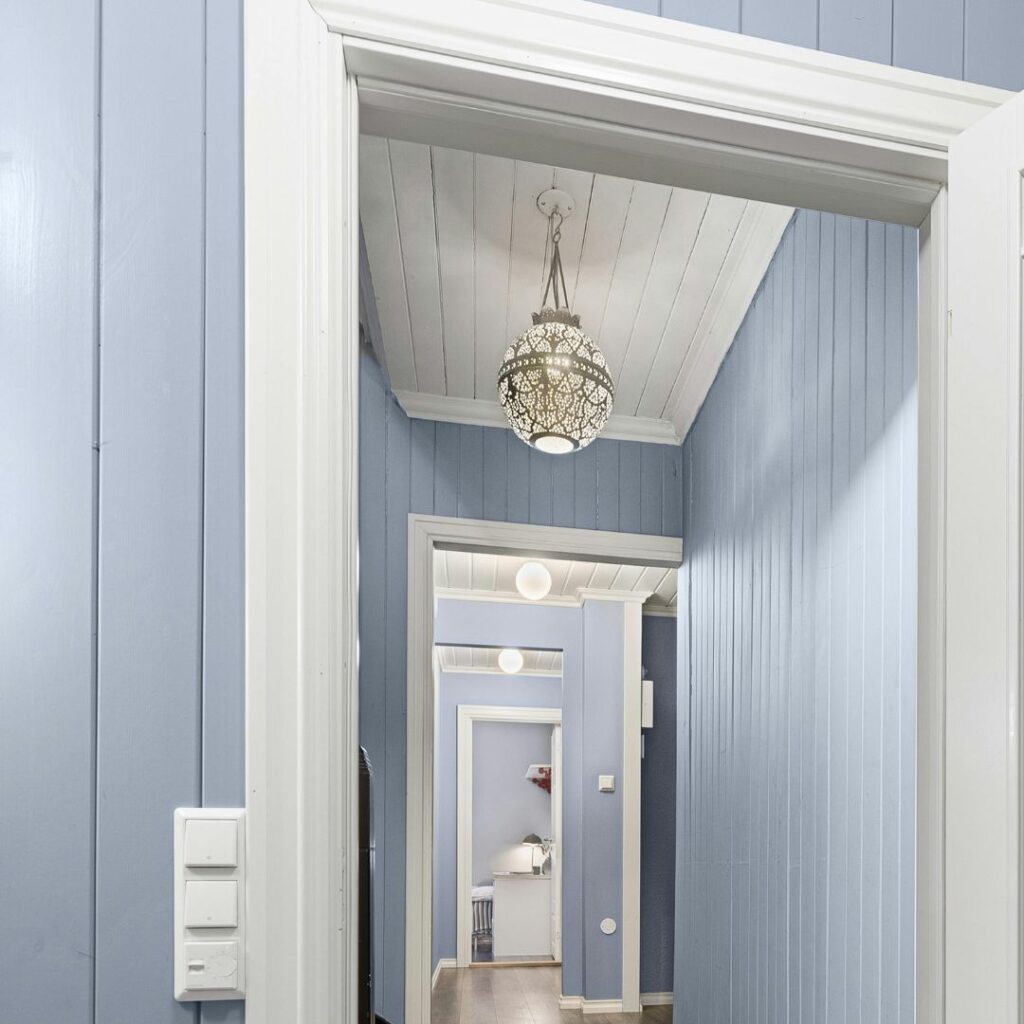
What color blue is in the photo after your title of The Final Word. Beautiful blue-gray. Looks to me like maybe violet undertones under the direct lighting further down the hallway. This is the shade of blue I’ve been searching for!
By the way, another great article and so timely since I’ve been wondering which white trim color to use in my powder room.
Thanks so much — I’m thrilled the timing of this post was helpful! 💙
You have a great eye — that hallway photo definitely shows a gorgeous blue-gray with a whisper of violet in certain lighting. Since it’s not from my own home, I don’t have the exact paint color, but I pulled together a list of similar Sherwin-Williams shades that give off that same calm, cool vibe.
Because I can’t attach an image here in the comments, I just sent you a quick email with a color suggestions graphic I made — it includes a handful of great options to sample like Upward, Windy Blue, Aleutian, and a few others that might be just what you’re looking for.
Let me know what direction you’re leaning — and if you’d like help choosing a white trim color to pair with it in your powder room, I’m happy to help with that too!